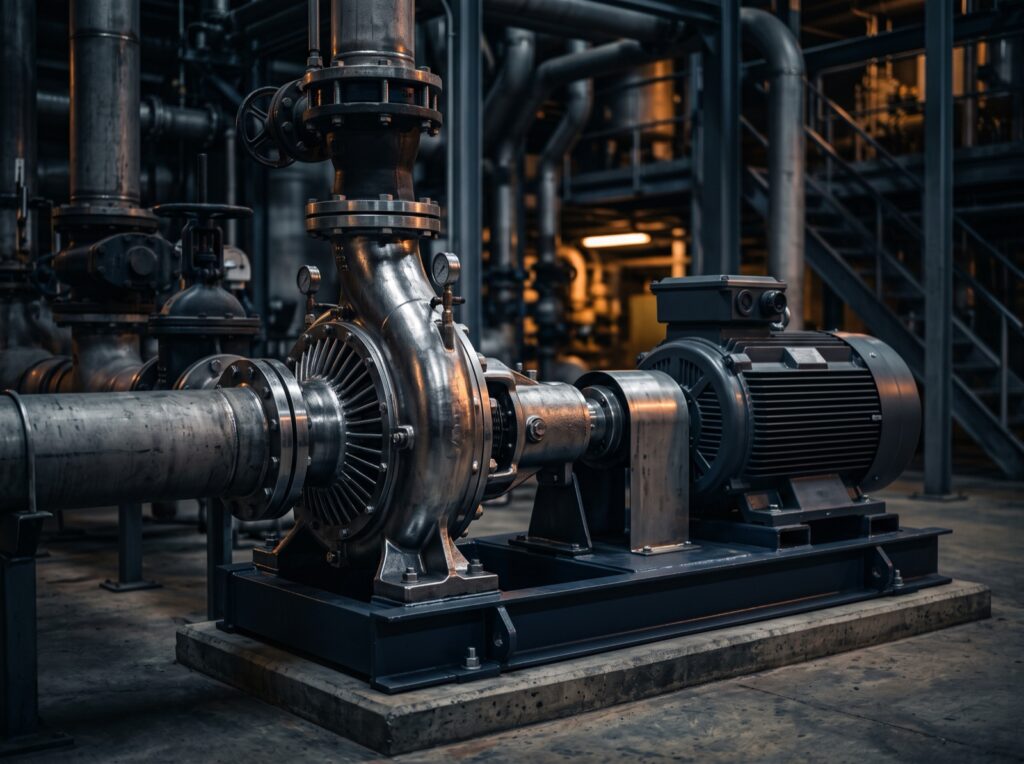
Industrial pumps are the heart of process lines. Choosing the right pump makes a big long-term difference in both energy efficiency and maintenance costs. A wrong choice leads to problems such as cavitation, excessive energy consumption and frequent breakdowns.
1. Flow Rate and Head
The basis of pump selection is the flow rate (Q) and head (H) required by the system. When these values are not calculated correctly, the pump either falls short or runs inefficiently by consuming more energy than necessary.
2. Fluid Properties
The viscosity, temperature, density and solid particle content of the fluid determine the pump type and body material. Abrasive or corrosive fluids require special materials and sealing solutions.
3. The Right Pump Type
- Centrifugal pump: The most common solution for high-flow, low-viscosity fluids.
- Gear pump: Preferred for viscous fluids and applications requiring a constant flow.
- Dosing pump: Used for precise, controlled flow such as chemical dosing.
4. Cavitation and NPSH
For safe pump operation, the available NPSH value must be above the pump’s required NPSH value. Otherwise cavitation occurs, causing efficiency loss and impeller damage.
5. Efficiency and Energy Consumption
High-efficiency pumps, although their initial cost is slightly higher, provide significant energy savings over their operating life. Using a frequency inverter increases savings in variable-flow systems.
The true cost of a pump is not its purchase price, but the energy and maintenance it consumes over its lifetime.
Conclusion
The right pump is selected by evaluating flow rate, head, fluid properties and efficiency criteria together. Get in touch with us for a pump solution that fits your needs.