In industrial facilities, valve selection is a critical engineering decision for line efficiency, safety and operating costs. A poorly chosen valve leads to pressure losses, leaks, premature wear and unexpected production downtime. The right valve, on the other hand, keeps the system running smoothly for many years.
1. Fluid Type and Operating Conditions
The first step in valve selection is to determine the type (water, steam, gas, chemical, viscous liquid), temperature and pressure of the fluid to be carried. For corrosive or abrasive fluids, stainless steel or special-alloy bodies should be preferred. In high-temperature applications, sealing elements must also be selected from suitable materials.
2. Determine the Valve Type
Each valve type answers a different need:
- Ball valve: Ideal for fast on-off, full sealing and low pressure loss.
- Butterfly valve: A lightweight, economical and compact solution for large-diameter lines.
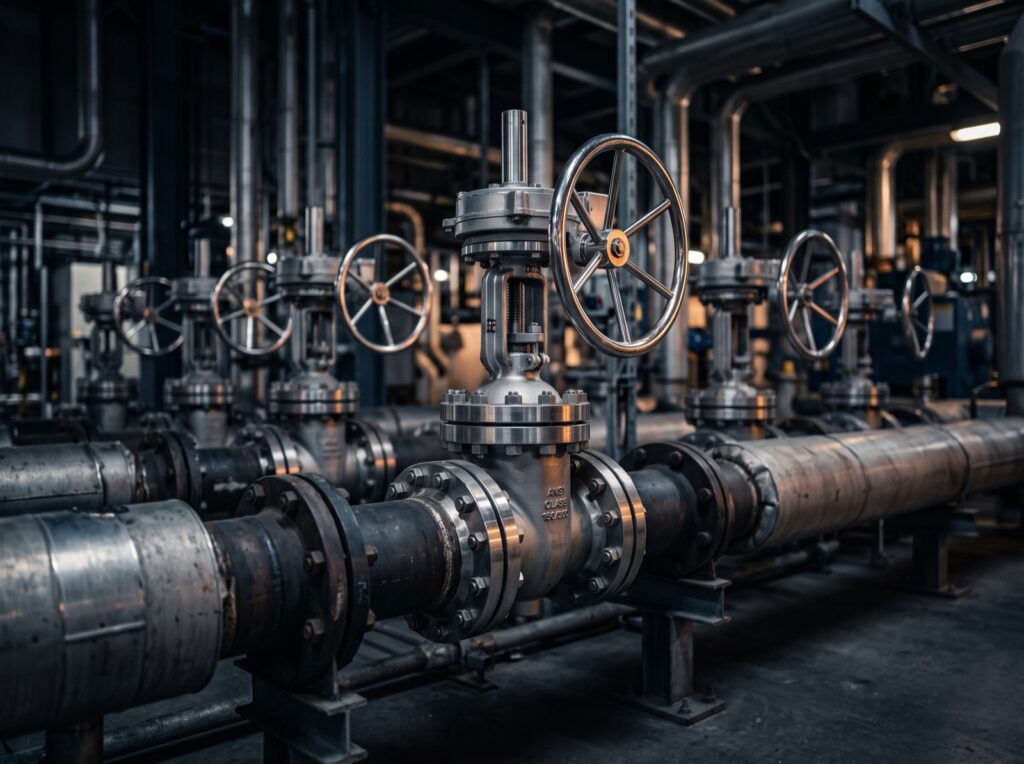
- Gate valve: Offers minimum pressure loss on lines that require fully open or fully closed operation.
- Check valve: Prevents reverse flow and equipment damage by allowing the fluid to move in one direction only.
- Globe valve: Designed for applications requiring precise modulating flow control.
3. Pressure and Temperature Class
The pressure class (PN/Class) and temperature range of the line directly determine the body and internal part materials. The rated pressure of the selected valve must be above the maximum operating pressure of the system.
4. Connection and Sealing
Flanged, threaded or welded connection options must match the standard of the line. Sealing elements such as gaskets, o-rings and packing must also be selected to withstand the operating temperature and the fluid.
5. Automation and Control
On lines requiring remote or automatic control, pneumatic or electric actuated valves are preferred. This enables process automation and reduces operator intervention.
The right valve choice determines not only the initial investment but also the energy, maintenance and downtime costs over the entire life of the line.
Conclusion
Valve selection requires evaluating the fluid, pressure, temperature, connection and control needs together. To determine the most suitable valve for your application, you can review our product groups or get support from our expert team.